Shadow Spirit
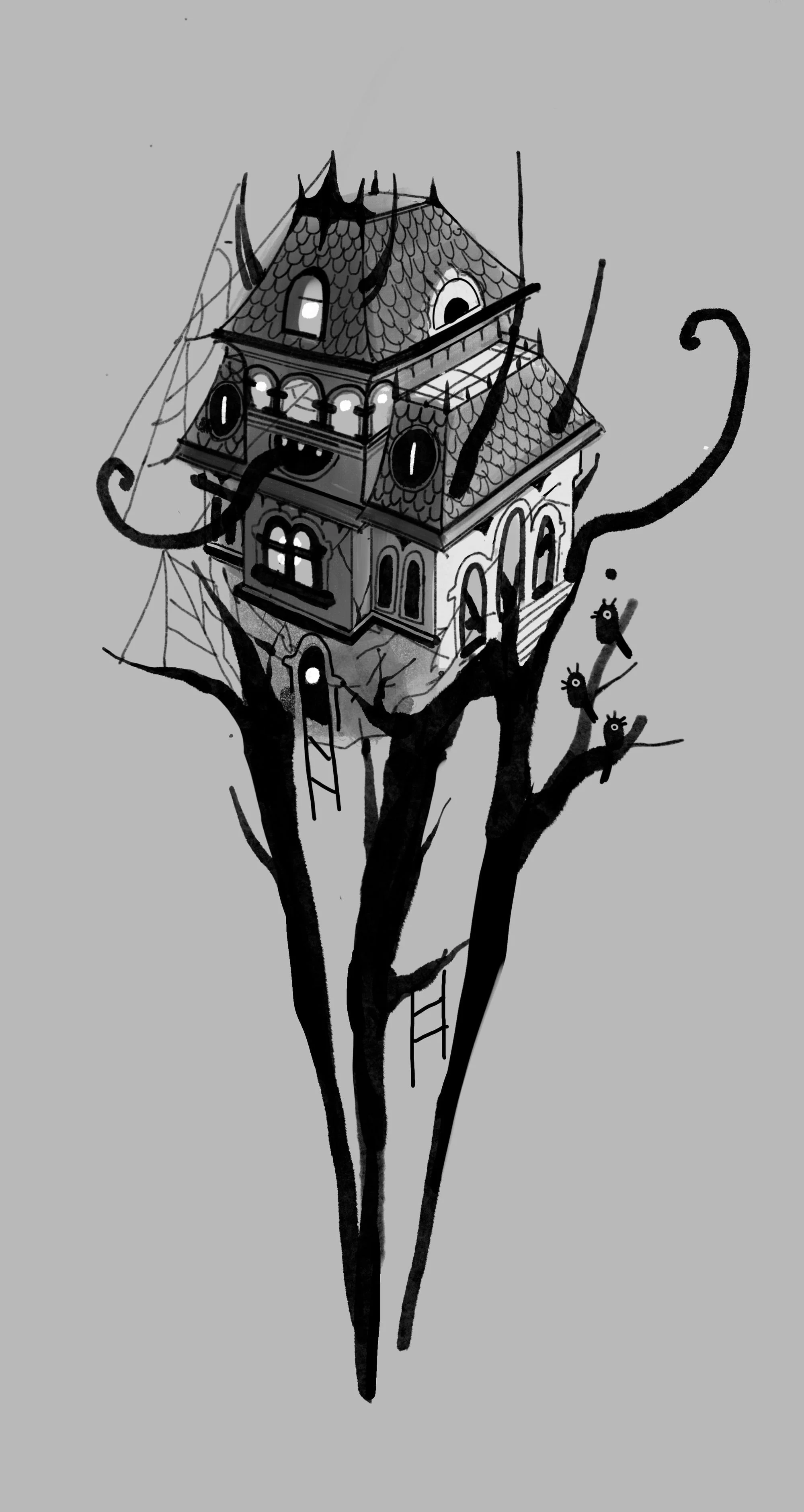
A hause haunted by level 4 shadow spirit.
Classification
Non-human Magical Entities
(Pre-linguistic, non-linear consciousness)
Core Definition
Shadow spirits are non-human entities that inhabit objects, structures, and environments.
They do not originate from human souls and do not possess identity in the human sense.
They are impulse, pattern, and presence rather than personhood.
Unlike Soul Flames, shadow spirits are not fragments of people.
They do not remember lives — they respond to conditions.
Ontological Nature
Non-verbal by default
Emotionally reactive rather than intentional
Develop behavior through prolonged inhabitation
Lack desire for domination or ownership
Shadow spirits mirror how a place or object is treated.
Care stabilizes them. Fear and control distort them.
Spirit Levels
Level 1 — Wandering Spirits
彷影 — Hōei
Description
Shapeless, transient spirits that drift without attachment.
They rarely remain in one vessel for long.
Abilities
Minimal influence
Objects may shiver, glow faintly, or emit soft sounds
Examples
A teapot that whistles on its own
A broom that sweeps briefly, then stops
Common Use
Rarely sealed or bound
Considered nuisances rather than threats
Level 2 — Mischief Spirits
戯影 — Giei
Description
Playful, curious spirits that enjoy harmless disruption.
They inhabit objects longer and interact with surroundings.
Abilities
Self-movement
Emission of light or sound
Minor chaos (spilled ink, slamming doors)
Examples
A chair that rocks on its own
A door that locks itself
A vase that subtly shifts patterns
Common Use
Occasionally bound for novelty
Generally undervalued by institutions
Level 3 — Functional Spirits
実影 — Jitsuei
Description
Stable, cooperative spirits that grant consistent, practical functions.
Highly prized for domestic and creative use.
Abilities
Endless refilling
Autonomous writing or movement
Environmental responsiveness
Examples
Self-refilling teapots
Pens that write independently
Common Use
Frequently bound and traded
Subject to regulation and classification
Level 4 — Symbiotic Spirits
共影 — Kyōei
Description
Rare, intelligent spirits that form deep bonds with their vessels.
Spirit and object become functionally inseparable.
Abilities
Complex magical systems
Defensive or navigational intelligence
Communication (subtle or direct)
Emotional response to caretakers
Examples
Sentient houses
Common Use
Bound with advanced sigils
Owners may tattoo matching sigils
Highly targeted by institutions
Level 5 — Dominion Spirits
覇影 — Haei
Description
Ancient, immensely powerful spirits.
Their presence reshapes objects, structures, or environments.
Abilities
Environmental manipulation
Spatial or structural reconfiguration
Illusion or reality distortion within a domain
Examples
Mobile houses targeted by the House Hunting Society
Weapons that consume their wielder’s energy
Common Use
Always sealed with the highest-level sigils
Only the most skilled or reckless attempt interaction
Classified as catastrophic risks if unbound
Additional Classification Tags
Shadow spirits may also be categorized by behavioral traits:
Eternal
永影 — Ei’ei
Refuse to leave their vessels
Ideal for long-term infrastructure or protection
Fickle
戯影 — Giei
Frequently hop between objects
Cause instability and frustration
Ancient
古影 — Ko’ei
Extremely old
Carry forgotten or irreproducible powers
Predatory
食影 — Shokuei
Consume ambient energy or caretaker vitality
Destabilize environments
Obscuritea and Shadow Spirits
Obscuritea is a botanical medium that responds to prolonged shadow spirit presence.
Spirit Level Interaction
Most responsive to:
Level 2 — Mischief Spirits
Level 3 — Functional Spirits
Can stabilize environments influenced by Level 4 spirits
Function
Absorbs ambient spirit residue
Records emotional and environmental patterns
Acts as a translator between place and caretaker
Obscuritea does not bind spirits.
It reflects them.
Thrives in unbound or loosely coexisting environments and loses potency under forced sealing.
Houses as Shadow Spirit Vessels
Houses are the most stable long-term vessels for shadow spirits.
Spirit Level Distribution
Dormant houses: Level 1–2
Awakened houses: Level 3–4
Mobile or manifest houses: Level 4–5
Prolonged inhabitation leads to shared agency between spirit and structure.
Known Cases
The Haunted Tea House
Level 4 — Symbiotic Spirit
Responsive, protective, care-based coexistence
The Rider’s House
Level 4 approaching Level 5
Mobility restrained through ethical care
Houses are not possessed — they are grown into.
Relationship to Institutions
The House Hunting Society:
Classifies shadow spirits by risk
Enforces binding as safety protocol
Aggressively targets Level 4–5 manifestations
Treats coexistence as negligence
Institutional fear is rooted in loss of control, not instability.
Relationship to Emha
Practices coexistence rather than domination
Allows spirits to choose vessels
Rejects forced binding as ethical violation
Narrative Function
Ambient Will
Shadow spirits express the world’s subconscious response to care, neglect, fear, and control.
They are how environments remember without memory.
Associated Themes
Agency • Coexistence • Control • Presence • Care • Environment