Haunted Houses
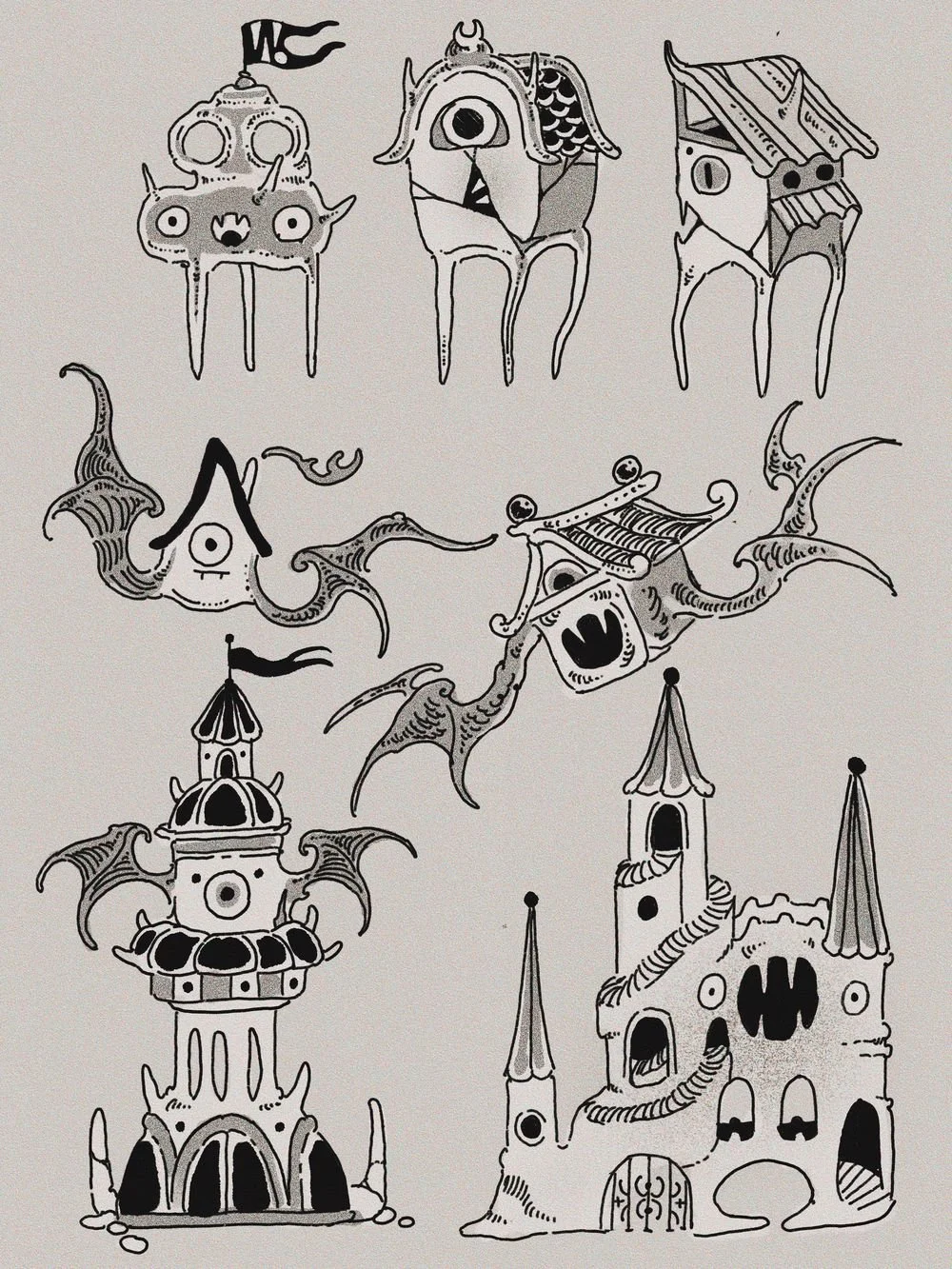
Level 2-3 House Haunting
Definition
In this world, houses are not merely structures.
They are potential vessels — architectural invitations left for Shadow Spirits to inhabit.
A house may remain inert forever.
Or it may awaken.
The Practice of Making Houses
Across history, people have constructed tiny houses in the hope that a shadow spirit might one day choose to inhabit one.
These miniature structures are not toys.
They are deliberate offerings.
Tiny Houses
Built small to attract lower-level spirits
Designed to be easily abandoned or exchanged
Often placed in clusters
Crafted with care, symbolism, and intention
Most are never haunted.
But occasionally, a shadow spirit enters — most often a Level 2 Mischief Spirit.
At this stage, the relationship resembles that of a hermit crab:
the spirit occupies the structure temporarily and may later leave for another vessel.
Materials and Design
Tiny houses are built using materials believed to influence the spirit’s eventual nature.
Examples include:
Woods associated with warmth or calm
Stone chosen for stability or protection
Metals thought to encourage vigilance or secrecy
Intricate carvings meant to invite curiosity
The designs are intentionally elaborate.
Shadow spirits are not summoned — they are enticed.
House Evolution
If a shadow spirit remains within a house long enough, both begin to change.
Early Stage
Minor movement
Subtle temperature shifts
Rearranging of interior space
Advanced Evolution
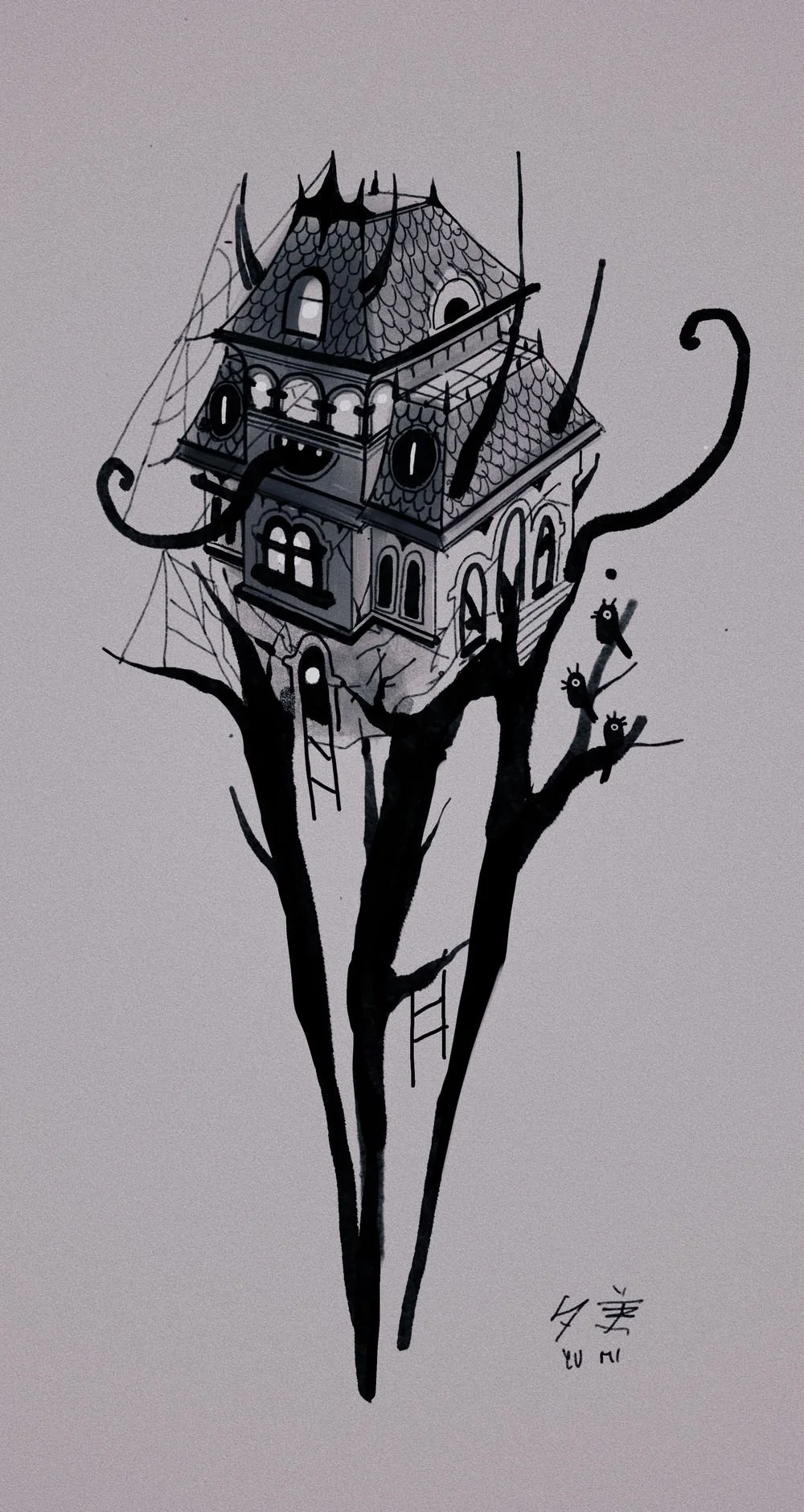
Level 4 or 5 House Haunting
Expansion in size
Development of internal logic (rooms, corridors, hidden spaces)
Emergence of preferences and behaviors
In rare cases, a house and spirit evolve together toward Level 4 or even Level 5, becoming:
fully functional living houses
mobile structures
sentient places capable of defense or protection
At this point, the house is no longer miniature.
It has grown.
Sigils and Taming
To make such houses usable by manifesters, sigils are carved into the walls.
Sigils serve to:
anchor the spirit to the structure
limit its range of behavior
allow habitation by people
extract useful qualities from the house
Common stabilized qualities include:
perfect internal temperature year-round
protective behavior toward possessions
hidden rooms accessible only to the owner
spatial expansion beyond external dimensions
However, many qualities only emerge over time.
A house’s true value may not be known for years.
Value and Nuisance
Not all evolved houses are desirable.
Some become extraordinarily valuable.
Others are considered burdens.
A house that:
hoards objects
refuses to move
requires constant maintenance
responds poorly to sigils
may be labeled a nuisance, even if it is powerful.
The value of a house is determined less by its potential and more by how well it can be controlled.
House Cemeteries
Over time, many regions once known for spirit activity have become littered with abandoned tiny houses.
These places are known as House Cemeteries.
Characteristics
Dozens or hundreds of tiny, decaying houses
Many never inhabited
Others briefly haunted, then abandoned
Materials rotted, cracked, or perished
The age of a house cemetery can be judged by:
the degree of decay
how many structures have collapsed entirely
the absence of active shadow spirits
As shadow spirits grow rarer, house cemeteries become relics of failed hope.
Law and Danger
Unbound houses — especially evolved ones — are considered illegal.
The belief is that:
unbound houses pose life-threatening risks
sentient places cannot be trusted
coexistence encourages escalation
The law insists that binding is necessary for safety.
Experimenting with coexistence is viewed as reckless, unethical, and criminal.
Institutions and the Exploitation of Houses
As sentient houses became rarer and more valuable, multiple institutions emerged to regulate, control, and profit from them.
These organizations frame their actions as necessary for public safety, while quietly transforming houses into assets.
The House Hunting Society
The House Hunting Society is the most influential of these institutions.
Public Mandate
Locate abandoned or unregistered sentient houses
Neutralize perceived threats
Prevent unregulated evolution of houses and spirits
Actual Practice
Actively hunts unbound or loosely bound houses
Employs specialists with rare abilities to:
detect shadow spirit activity
track dormant or mobile houses
forcibly bind high-level spirits
Facilitates the sale of captured houses to the highest bidders
Members of the Society are highly trained and often extraordinarily powerful.
Their expertise lies not only in combat, but in recognition — the ability to sense where a house wants to be, and intercept it.
Known Deviations
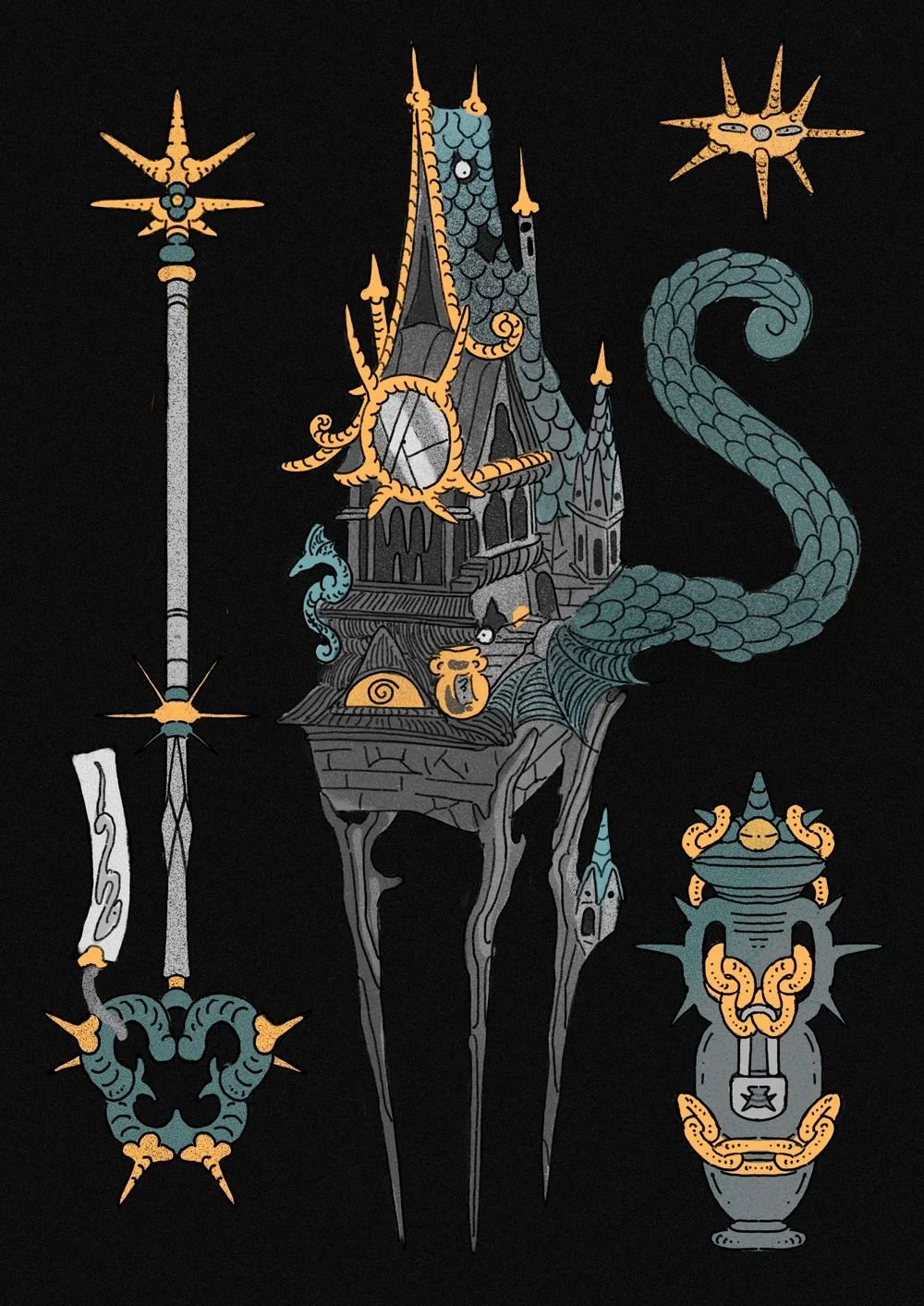
The Riders House and it’s artifacts
The Rider’s House
Unlike most houses, the Rider’s house exhibits:
full mobility
extreme restraint
deliberate avoidance of harm
Rather than relying solely on sigils, the Rider has learned the house’s preferences.
The house loves caterpillars and butterflies.
To maintain trust and cooperation, the Rider constructed a greenhouse inside the house, filled with caterpillars and butterflies.
This environment calms the spirit and encourages responsiveness.
Control is replaced with care.
The Haunted Tea House
The Haunted Tea House represents another deviation.
Rather than taming the house through sigils, Emha is gradually removing them, testing whether the house can be befriended rather than bound.
The house:
does not move
hoards objects
demands constant attention
It is widely considered a nuisance.
Yet it continues to awaken.
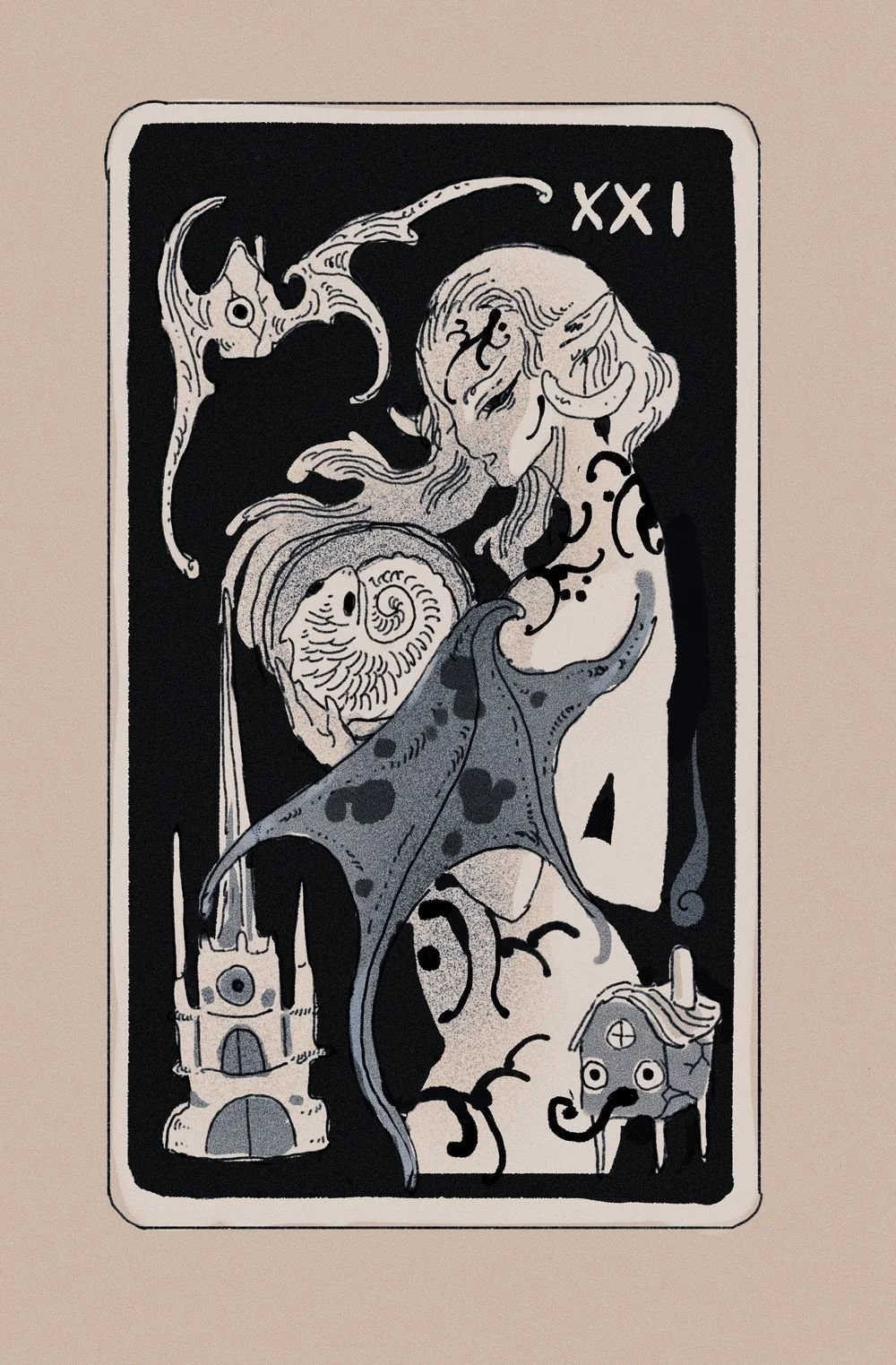
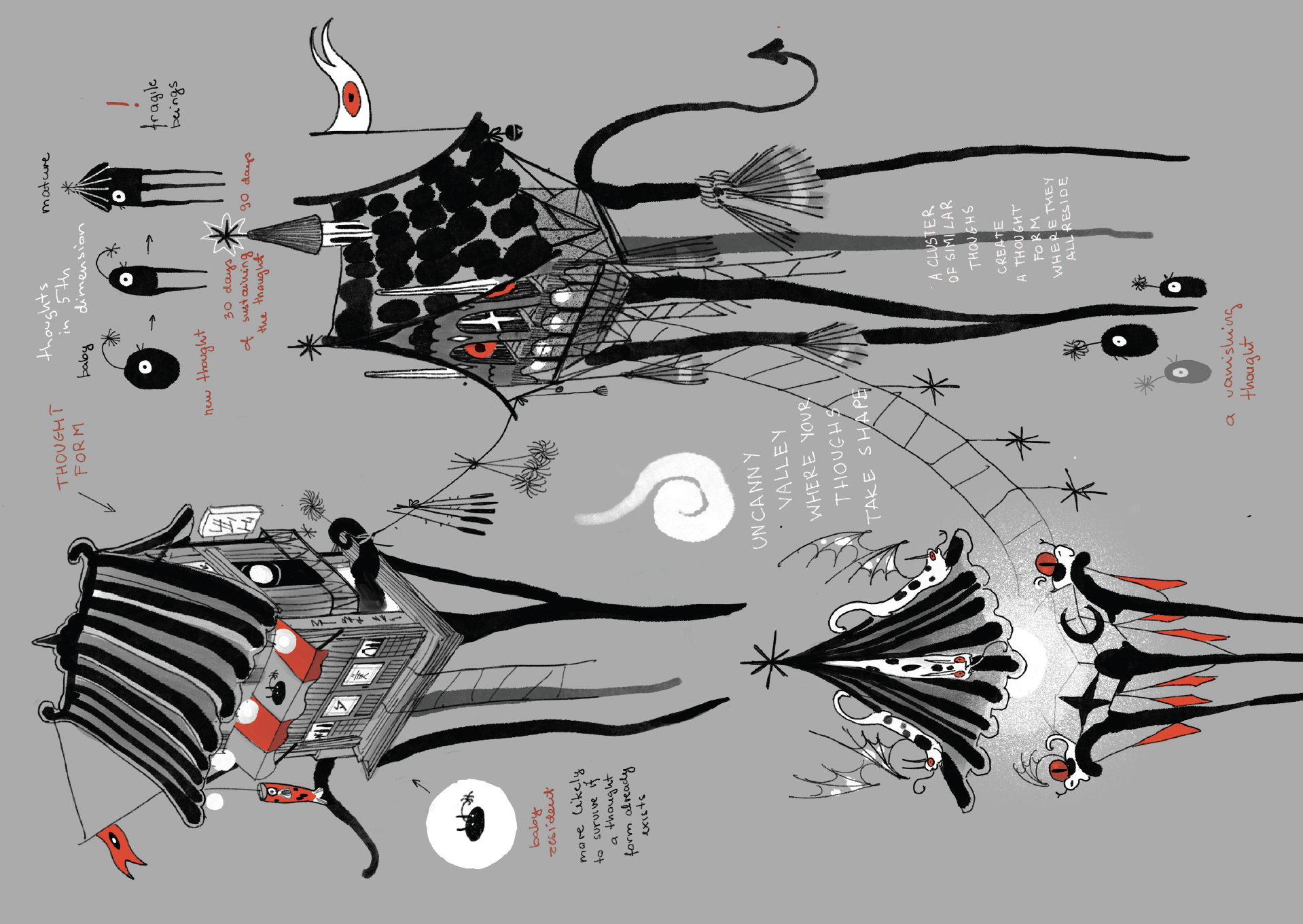
Image on the left: The World Tarot Card from Emha’s Tarot Deck
On the right: Early Haunted House Concept from 2022
Shadow Spirits • Sigils • Coexistence • Control • Risk • Home • Law